Understanding, Diagnosing, and Treating Low Testosterone
Testosterone plays a vital role in a man’s health — influencing energy, mood, libido, muscle mass, and even long-term metabolic function. Yet, many men experience a gradual decline in testosterone as they age, often without realising it. At Orion Medica, we believe that understanding and optimising hormonal health is central to wellbeing — not just for performance, but for long-term vitality and disease prevention.
So what are some signs of low testosterone?
• Reduced sex drive or erectile difficulties
• Fatigue and low energy
• Loss of muscle mass and increased body fat
• Low mood, irritability, or poor concentration
• Reduced body hair or shaving frequency
How do we diagnose androgen deficiency?
We diagnose androgen deficiency through the Androgen Deficiency in the Ageing Male (ADAM) questionnaire and through a series of blood tests looking at:
• Total testosterone
• Sex hormone-binding globulin (SHBG)
• Luteinising hormone (LH) and Follicle-
hormone (FSH)
• Prolactin
What causes androgen deficiency?
There are several causes of androgen deficiency and by taking a thorough set of medication history, lifestyle details and blood tests, we can determine the most likely causes. These include:
• Ageing (late-onset hypogonadism)
• Obesity and metabolic syndrome
• Pituitary or testicular disorders
• Certain medications (e.g. steroids, opioids)
• Chronic stress, poor sleep, or overtraining
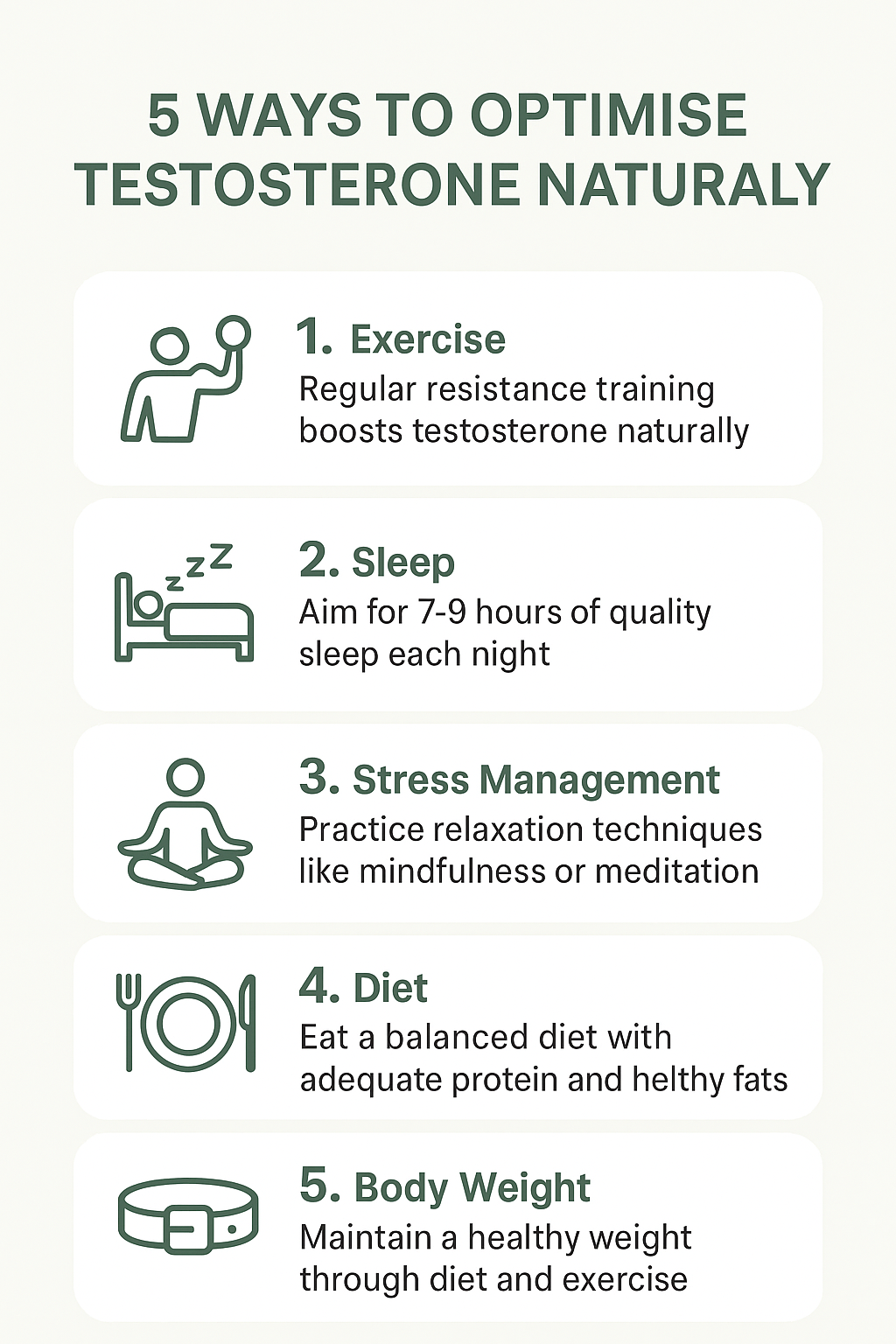
Below are some ways that lifestyle factors such as stress, sleep and exercise can affect natural production of hormones:
• Poor sleep lowers testosterone and growth hormone.
• One week of restricted sleep can reduce testosterone by up to 15%.
• Chronic stress increases cortisol, which suppresses testosterone.
• Regular resistance training boosts testosterone naturally.
• Maintaining a healthy weight improves hormone balance.
What can we do to help androgen deficiency?
So now we have identified a problem, what can be done about it? Firstly, we can try to correct some of the lifestyle factors mentioned above. At Orion Medica, lifestyle factors will always come first when making interventions as these are usually the safest and cheapest ways to improve our health.
However, in some cases, lifestyle factors alone will not help with androgen deficiency. For instance, multiple studies show that testosterone will decline by 1-1.6% per year on average in males after the age of 30 years old. In these cases then testosterone replacement therapy (TRT) can have provide huge benefits such as:
• Improved energy and mood
• Increased muscle mass and strength
• Better libido and sexual function
• Enhanced bone health.
But TRT is not suitable for everyone. Using TRT can also have the following side-effects which will be closely monitored at Orion Medica:
• suppression of natural testosterone production
• raised red blood cell count and blood pressure (risk of clotting if uncontrolled)
• increased risk of prostate cancer
For these reasons, TRT requires regular monitoring, including blood tests, PSA checks and blood pressure checks.
The Bottom Line
Testosterone plays a fundamental role in energy, mood, strength, and long-term health — but it’s just one part of the picture. Understanding your hormones, improving lifestyle foundations, and getting the right medical guidance can help you age stronger, think clearer, and live with vitality. At Orion Medica, we’re here to help you do exactly that — through evidence-based men’s health care tailored to you.