What’s the deal with oral hygiene?
Your Mouth Matters More Than You Think
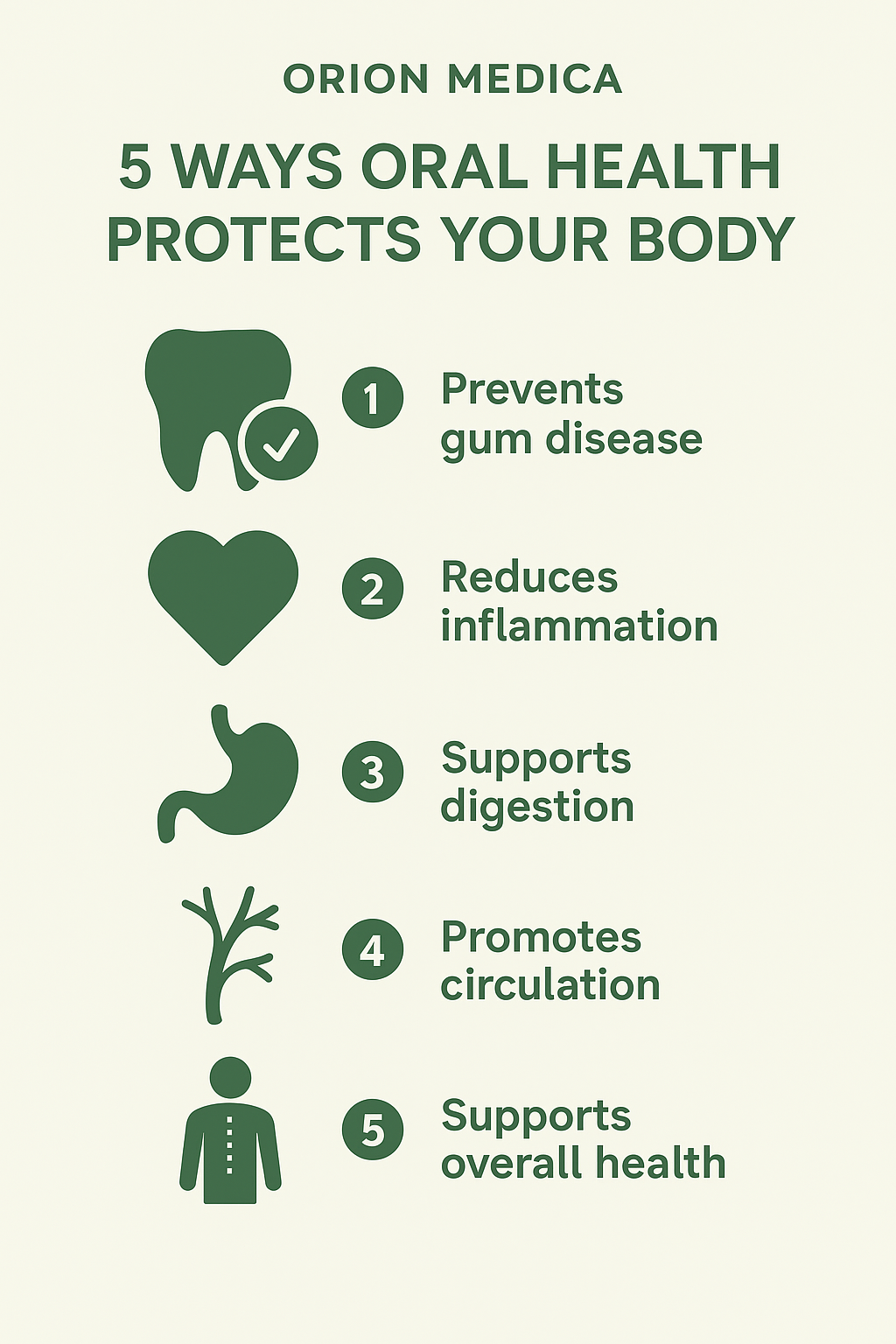
When most people think about health, they picture the heart, brain, or gut — but your mouth plays a powerful role in your overall wellbeing. It’s not just about teeth and gums; oral health is deeply connected to inflammation, digestion, and cardiovascular health.
The mouth is the gateway to the body — and taking care of it is one of the simplest ways to protect your long-term health.
The Hidden Inflammation Link
Your mouth is full of bacteria — some good, some bad. When oral hygiene slips, harmful bacteria can overgrow, leading to gum disease (periodontitis). What starts as mild bleeding or tenderness can progress into chronic inflammation.
That inflammation doesn’t stay local. The bacteria and inflammatory chemicals can enter the bloodstream, triggering a systemic inflammatory response. Research shows that poor oral health is linked to:
Increased risk of heart disease and stroke
Worsening of diabetes control
Higher levels of C-reactive protein (CRP) — a key marker of inflammation
Your Mouth: The First Step in Digestion
The mouth is where your body starts breaking down food and preparing it for absorption.
Saliva contains amylase; an enzyme that start digesting carbohydrates.
Chewing helps with the mechanical breakdown of foods, therefore preparing it for when it reaches your stomach.
When you chew you also release signals to tell your stomach and pancreas to prepare their digestive secretions.
If the mouth is inflamed or the balance of bacteria is disturbed, digestion and metabolic signalling can be affected right from the start.
A common mistake to make
While it’s tempting to reach for strong antiseptic mouthwashes, regular use of these products often kill both harmful and beneficial bacteria.
Here’s why that matters:
Certain oral bacteria convert nitrates (from foods like beetroot and leafy greens) into nitric oxide (NO).
Nitric oxide helps relax blood vessels, lowers blood pressure, and supports healthy circulation.
Overuse of strong antibacterial mouthwash (especially chlorhexidine-based ones used daily) can reduce nitric oxide availability, potentially impairing cardiovascular health.
So, while “fresh breath” might be achieved, the long-term impact on vascular and metabolic health can be negative.
Time to take a more balanced approach to oral health
Healthy oral hygiene doesn’t mean sterilising your mouth — it’s about balance.
The best practices to maintain good oral health are:
Brush twice daily for 2 minutes at a time. Spend 30 seconds on each quadrant of your mouth ie. upper left jaw, lower left jaw, lower right jaw, upper right jaw.
Floss or use interdental brushes daily to prevent gum inflammation.
Use gentle mouthwash sparingly, or choose formulations without alcohol or strong antiseptics.
Regular dental check-ups to catch early signs of gum disease or decay.
Good oral hygiene isn’t just cosmetic — it’s a cornerstone of systemic health. By protecting the mouth, you:
Reduce chronic inflammation
Support digestive and gut function
Promote healthy nitric oxide levels for heart health
At Orion Medica, we advocate for a whole-body approach — where oral care, nutrition, and lifestyle all work together to protect your long-term wellbeing.
The Bottom Line
Your mouth is the start of your digestive tract and a key player in your overall health. Think of brushing and flossing not just as dental care, but as preventive medicine for your entire body.
Small daily habits — gentle cleaning, mindful product choices, and a nutrient-rich diet — can help you smile brighter, age healthier, and live longer.