How can strength training improve my longevity?
Resistance Training: The Secret to a Longer, Healthier Life
When most people think of exercise for longevity, they picture running, cycling, or swimming. While aerobic activity is excellent for heart health, growing evidence shows that resistance training (strength training) may be just as important — if not more — when it comes to living a longer, healthier life.
So firstly, what is Resistance Training?
Resistance training includes any activity that works your muscles against a weight or force. This might mean lifting dumbbells, using resistance bands, performing bodyweight exercises like push-ups or squats, or training with gym machines.
The goal isn’t just building muscle mass — it’s improving strength, function, and resilience.
How does resistance training improve longevity?
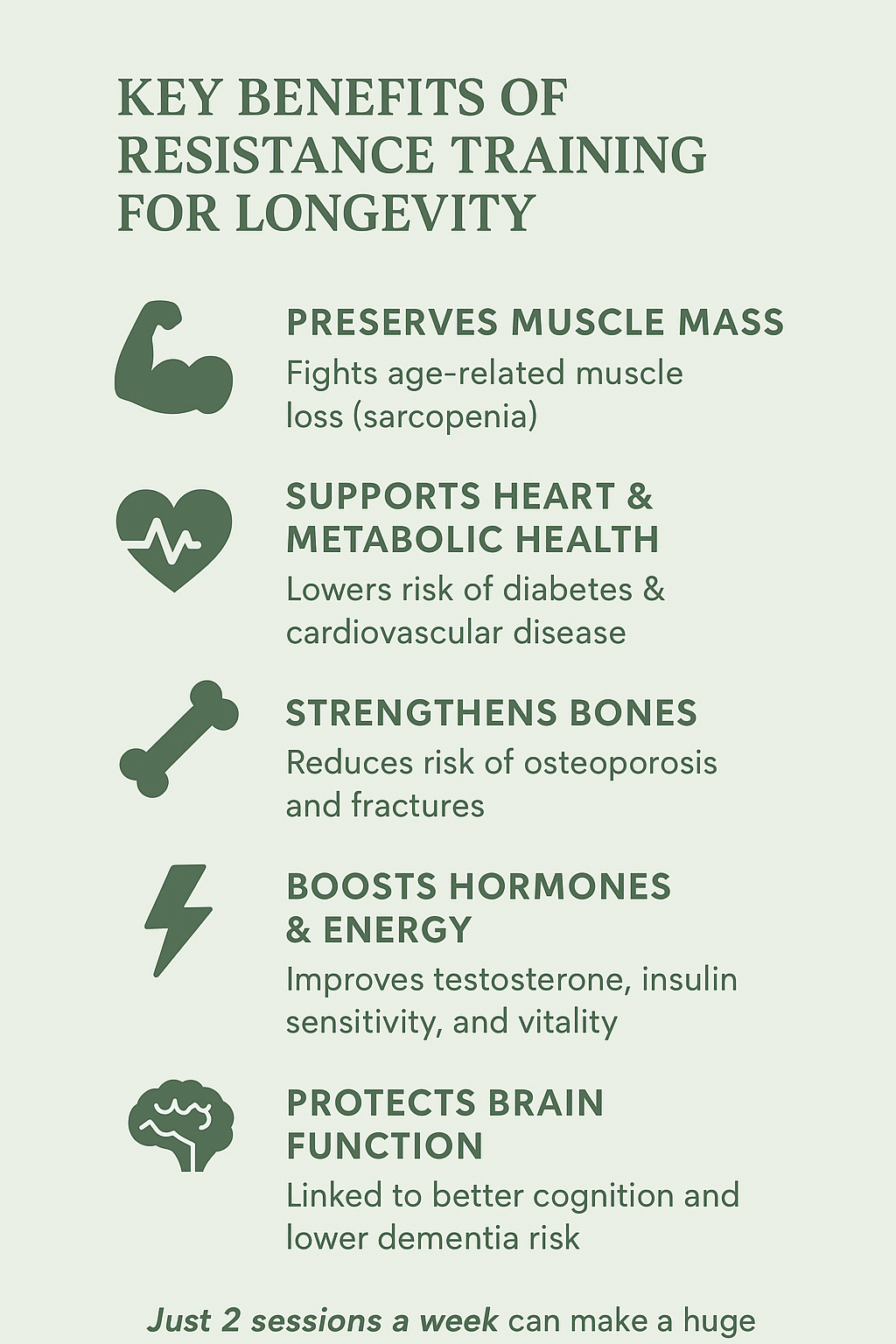
1. Maintains Muscle Mass (Fights Sarcopenia)
As we age, we naturally lose muscle — a condition called sarcopenia. This loss of strength contributes to frailty, falls, and loss of independence. Resistance training helps preserve and rebuild muscle, keeping you strong and mobile well into later life.
2. Supports Metabolic Health
Muscle is metabolically active tissue. More lean muscle means better control of blood sugar, reduced risk of type 2 diabetes, and healthier cholesterol levels. Studies show that strength training lowers the risk of cardiovascular disease and metabolic syndrome.
3. Improves Bone Density
Strength training places controlled stress on bones, stimulating them to grow stronger. This reduces the risk of osteoporosis and fractures — one of the biggest causes of disability in older adults.
4. Boosts Hormones and Energy
Resistance exercise helps regulate testosterone, growth hormone, and insulin sensitivity, all of which decline with age. This improves energy, vitality, and body composition.
5. Enhances Brain Health
Recent studies link strength training with improved cognitive function and reduced dementia risk. Exercise-induced changes in blood flow and growth factors may protect the brain.
How much resistance training do you need to do to see a benefit?
The World Health Organization (WHO) recommends:
At least 2 sessions per week of muscle-strengthening activities that include working all the major muscle groups (legs, chest, back, arms, core).
Sessions don’t need to be long or complicated. Even 20–30 minutes, twice per week can make a significant difference.
How can I incorporate resistance training into my routine?
At Orion Medica, we can help advise on the best ways to incorporate resistance exercises into your training. While we cannot give specific exercise schedules, we can work with you to devise a template of exercise that will allow you reap the benefits of strength training.
Some of the training ideas we can suggest include:
bodyweight movements like squats, push-ups, and planks. These can be adapted to you with modifications for regression (making it easier) and progression (making it harder).
resistance bands or machines to specifically target a muscle group
free weights to recruit more muscle groups than resistance machines whilst also allowing to target a specific set of muscle groups
Combine resistance training with aerobic activity, good nutrition, and adequate sleep for maximum benefit.
The Bottom Line
Resistance training isn’t just about building bigger muscles — it’s about staying independent, protecting your health, and living longer with vitality. At Orion Medica, we encourage our patients to see strength as medicine. By investing in your muscle health today, you’re investing in your future self.